
Many conservatories built in the UK during the 1980s, 1990s and early 2000s now show their age. While these spaces once added light and extra living area, older conservatory roofs often struggle to cope with today’s weather, insulation expectations and year-round use.
If your conservatory roof is more than 10–15 years old, you may already be noticing problems. Understanding what commonly goes wrong helps you decide whether a repair will solve the issue or whether replacement makes better sense.
Why Older Conservatory Roofs Develop Problems
Older conservatories often used materials and installation methods that no longer meet modern standards. In addition, years of exposure to UV light, temperature changes and heavy rain gradually weaken roof components.
As a result, even well-maintained conservatories can develop faults simply due to age.
1. Degraded Polycarbonate Roof Panels
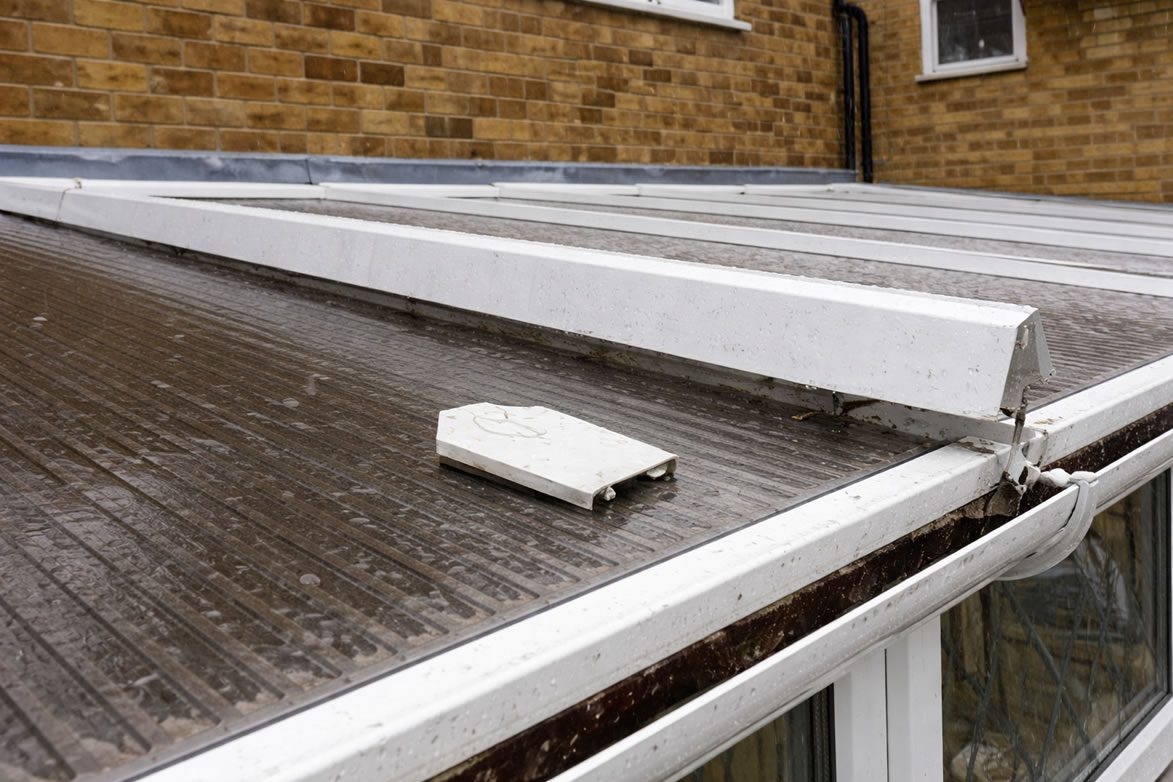
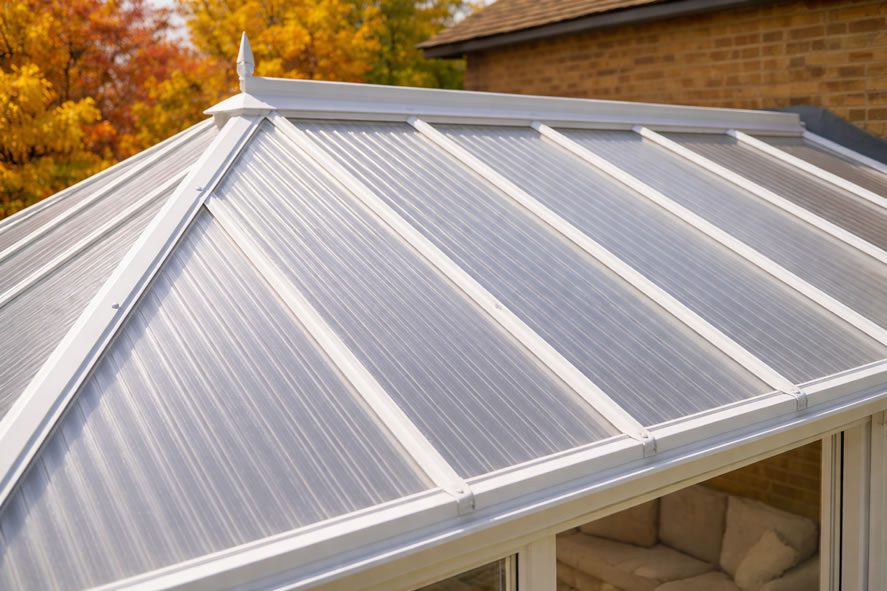
Polycarbonate roofing was widely used on older conservatories because it was lightweight and affordable. However, over time it degrades.
Common issues include:
- Yellowing or clouding of panels
- Brittleness and cracking
- Increased noise during rain
- Poor insulation and heat loss
Once polycarbonate reaches this stage, repairs often become less effective and panel replacement may be required.
2. Failed Roof Seals and Glazing Bars
Seals and gaskets dry out and shrink as they age. Consequently, water begins to seep through joints during rainfall.
Typical warning signs:
- Drips along glazing bars
- Damp patches on internal frames
- Leaks that worsen in heavy or wind-driven rain
Resealing can help, but widespread seal failure usually indicates a roof nearing the end of its lifespan.
3. Leaks Where the Conservatory Meets the House
Flashing problems are extremely common on older installations. In many cases, installers relied heavily on sealant rather than proper flashing systems.
You may notice:
- Damp patches on the house wall
- Water tracking from above doors or windows
- Leaks that appear only during storms
Targeted flashing repairs often solve this issue without replacing the roof.
4. Blocked or Failing Conservatory Guttering
Older conservatory guttering systems often clog easily and lose alignment over time. As a result, water overflows back onto the roof or walls.
Problems often include:
- Standing water in gutters
- Sagging or loose gutter sections
- Water spilling during heavy rain
In many cases, cleaning, realignment or partial replacement resolves the issue quickly.
5. Poor Insulation and Temperature Extremes
Older conservatory roofs rarely provide effective insulation. Consequently, homeowners experience:
- Extreme heat in summer
- Rapid heat loss in winter
- Condensation during colder months
This issue affects comfort more than weatherproofing, but it often drives homeowners to consider roof upgrades.
6. Condensation Misdiagnosed as a Roof Leak
In older conservatories, poor ventilation causes condensation that looks like a leak.
Condensation is likely if:
- Water appears evenly across surfaces
- Drips occur without rainfall
- Windows and roof panels mist heavily
Improving ventilation or adding climate control can resolve this without roof repairs.
7. Structural Wear and Movement
Over time, frames and fixings shift slightly due to settlement and thermal movement. This movement stresses seals and joints, which then fail.
While small amounts of movement are normal, excessive wear can increase leak frequency and reduce repair effectiveness.
Repair or Replace – What’s Best for Older Conservatories?
| Problem | Repair Suitable | Replacement Worth Considering |
|---|---|---|
| Single leaking panel | ✅ | ❌ |
| Failed flashing | ✅ | ❌ |
| Multiple cracked panels | ⚠️ | ⚠️ |
| Poor insulation overall | ❌ | ✅ |
| Frequent recurring leaks | ❌ | ✅ |
As conservatories age, replacement often becomes more cost-effective than repeated repairs.
How to Extend the Life of an Older Conservatory Roof
Although age-related wear is inevitable, you can slow deterioration by:
- Clearing guttering regularly
- Fixing minor leaks early
- Resealing joints before water damage spreads
- Scheduling periodic inspections
Early action almost always costs less than delayed repairs.
When to Call a Conservatory Roof Specialist
You should seek professional advice if:
- Leaks keep returning
- Water appears in several locations
- The roof is over 15–20 years old
- Comfort issues affect daily use
A specialist can confirm whether repair remains viable or if replacement offers better long-term value.
Get Help with Older Conservatory Roof Problems
If your conservatory roof shows signs of age, ignoring the issue often leads to higher costs later. A professional inspection gives clarity and prevents unnecessary work.
👉 Get free, no-obligation quotes from local conservatory repair specialists
Frequently Asked Questions: Older Conservatory Roof Problems
How long do conservatory roofs last in the UK?
Many conservatory roofs last around 10–20 years. However, lifespan depends on roof type, installation quality, and exposure to wind, rain and UV.
Are polycarbonate roofs worse than glass on older conservatories?
Polycarbonate often degrades faster and insulates less. Glass can last longer, but seals and joints still fail over time, so older glass roofs can leak too.
Why do older conservatories leak only in heavy rain?
Heavy or wind-driven rain pushes more water into weak seals, joints, flashing and gutters. As a result, small gaps that cope in light rain can fail during storms.
Can you replace only the damaged roof panels?
Yes. Specialists often replace individual polycarbonate panels or glass units when the rest of the roof remains in good condition.
How do I know if the leak is from flashing or the roof panels?
If the leak appears near the house wall or above doors/windows, flashing often causes it. If drips show along glazing bars or under panels, seals or panels are more likely.
Is condensation common in older conservatories?
Yes. Poor insulation and ventilation often cause condensation that looks like a leak, especially in winter and during temperature swings.
When should I replace an older conservatory roof?
Replacement becomes sensible when leaks are widespread, panels have degraded across the roof, insulation performance is poor, or repair costs keep repeating.