
Fortunately, specialists can usually repair or replace flashing without disturbing the conservatory roof itself, making this a targeted and cost-effective solution.
👉 Get free, no-obligation quotes for conservatory flashing repairs
What Is Conservatory Flashing?
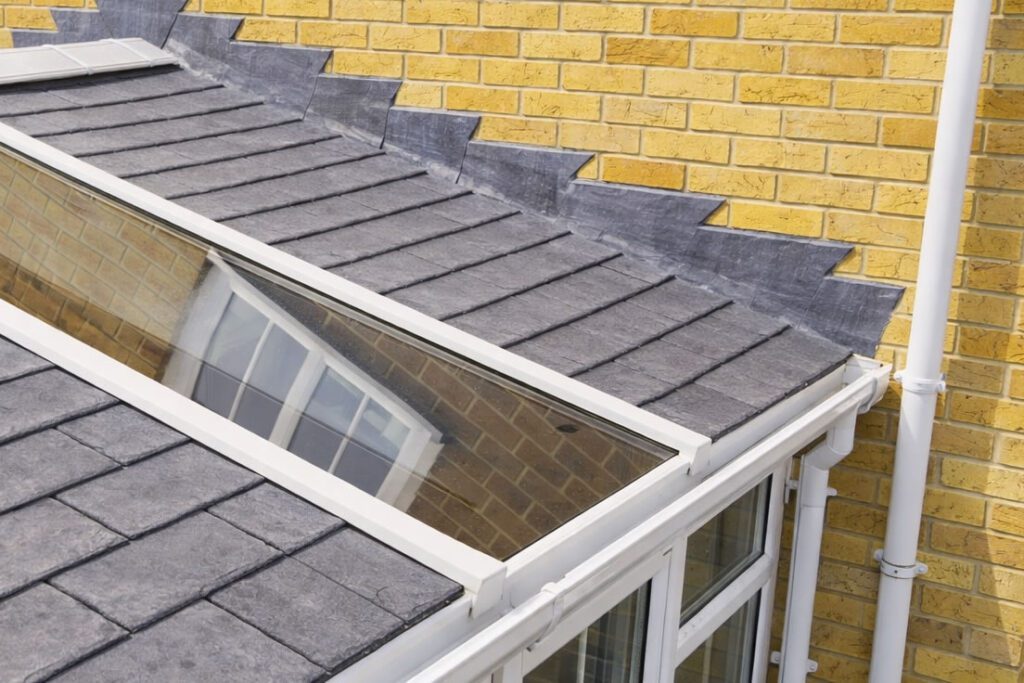
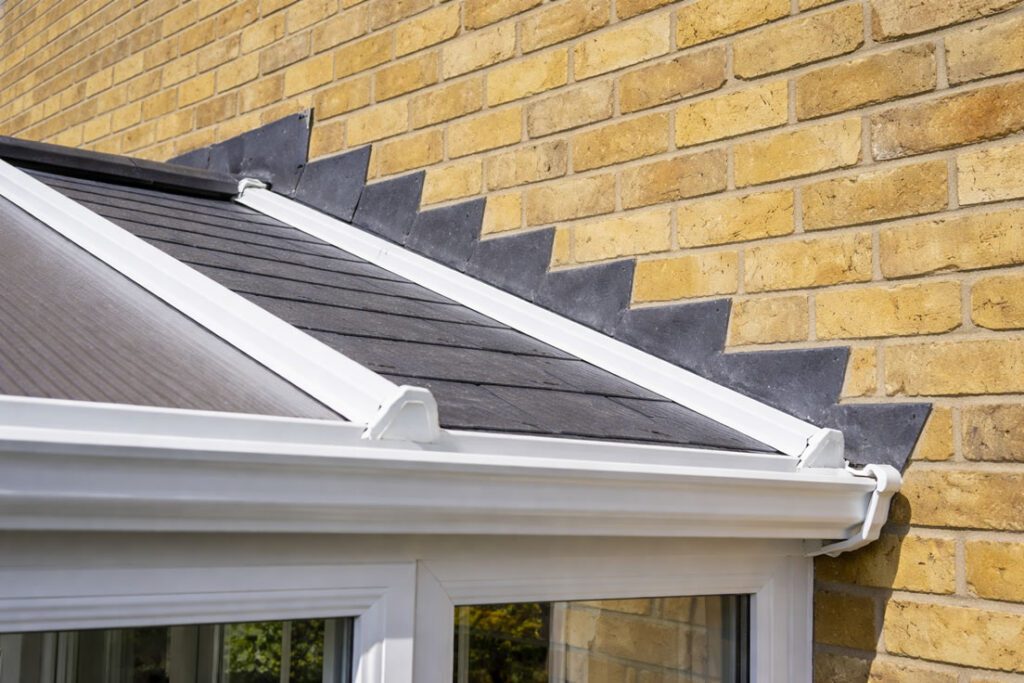
Flashing is the waterproof barrier fitted where the conservatory roof meets the external wall of the house. Its job is to direct rainwater away from joints and prevent it from penetrating behind brickwork or render.
Flashing commonly uses:
- Lead flashing
- Aluminium or composite flashing systems
- Sealant-backed flashing tapes (on older installations)
When flashing fails, leaks often appear inside the conservatory or on the internal house wall.
Common Signs of Flashing Problems
Flashing issues don’t always cause immediate drips. Instead, homeowners may notice gradual signs of water ingress, such as:
- Damp patches on internal walls near the conservatory
- Water staining above doors or windows
- Leaks appearing only during heavy or wind-driven rain
- Peeling paint or bubbling plaster
- Mould growth near the house connection
Because water can travel before becoming visible, early inspection is important.
Why Conservatory Flashing Fails
Over time, flashing can fail for several reasons, especially on older conservatories.
Common causes include:
- Ageing or cracked lead flashing
- Poor installation during the original build
- Sealant shrinkage or separation
- Movement between the house and conservatory
- Storm or wind damage
- Incorrect roof pitch or detailing
As these issues develop gradually, leaks often worsen if left untreated.
Types of Conservatory Flashing Repairs
Resealing Existing Flashing
If the flashing remains structurally sound, specialists may remove failed sealant and apply new weatherproof sealing to restore protection.
Lead Flashing Repairs or Replacement
Damaged or split lead flashing often needs partial or full replacement to ensure long-term waterproofing.
Upgrading to Modern Flashing Systems
Some homeowners choose modern aluminium or composite flashing systems, which provide consistent sealing and reduced maintenance.
Correcting Poor Installation
Where flashing was installed incorrectly, specialists refit or redesign the flashing detail to improve drainage and durability.
Flashing Materials Used on Conservatories
| Flashing Type | Typical Use | Lifespan |
|---|---|---|
| Lead flashing | Traditional installations | 20–40 years |
| Aluminium flashing | Modern upgrades | 20+ years |
| Composite systems | Retrofit solutions | 20+ years |
| Sealant-only systems | Older conservatories | Short-term only |
Upgrading poor or sealant-only systems often prevents repeat leaks.
Conservatory Flashing Repair Costs (UK Guide)
Costs depend on access, wall height and flashing type. Typical UK price ranges include:
| Type of Work | Typical Cost (excl. VAT) |
|---|---|
| Flashing inspection | £80 – £200 |
| Resealing flashing | £150 – £350 |
| Partial flashing replacement | £250 – £600 |
| Full flashing replacement | £400 – £1,200+ |
👉 Get accurate local prices with free quotes
Flashing Repairs vs Roof Repairs
| Issue | Flashing Repair | Roof Repair |
|---|---|---|
| Leaks near house wall | ✅ | ❌ |
| Water staining on house wall | ✅ | ❌ |
| Cracked roof panels | ❌ | ✅ |
| Failed roof seals | ❌ | ✅ |
Correct diagnosis ensures the repair targets the real cause of the leak.
How Conservatory Flashing Repairs Work
1. Inspection
A specialist inspects the house connection, roof pitch and flashing condition.
2. Diagnosis
They confirm whether resealing, repair or replacement will solve the issue.
3. Repair Work
The flashing is repaired or replaced using appropriate materials and fixings.
4. Final Checks
The area is tested to ensure rainwater drains away correctly.
Most flashing repairs complete within a few hours to one day.
Do Flashing Repairs Need Planning Permission?
No. Conservatory flashing repairs usually do not require planning permission. However, work should still follow good building practice to ensure long-term weatherproofing.
Why Use Our Conservatory Flashing Repair Service?
- ✔ Up to 4 free, no-obligation quotes
- ✔ Vetted specialists with ID checks and insurance
- ✔ Experience with lead and modern flashing systems
- ✔ Honest advice on repair vs replacement
- ✔ UK-wide coverage
Get Free Quotes for Conservatory Flashing Repairs
Flashing leaks rarely fix themselves. Therefore, addressing the issue early prevents damp, mould and structural damage.
👉 Request free quotes today and compare local conservatory flashing repair specialists
Frequently Asked Questions – Conservatory Flashing Repairs
Can faulty flashing cause leaks inside the house?
Yes. Water can track behind the conservatory roof and enter the main property, causing damp patches or mould.
Is resealing flashing enough to stop leaks?
Sometimes. However, if the flashing itself is damaged or poorly installed, replacement usually provides a longer-lasting solution.
How long do conservatory flashing repairs last?
Properly installed flashing repairs can last 20 years or more, depending on materials used.
Can flashing be repaired in bad weather?
Minor inspections can take place, but most repairs need dry conditions for proper sealing.
Should flashing be checked during roof repairs?
Yes. Flashing often causes leaks, so specialists usually inspect it whenever conservatory roof issues occur.